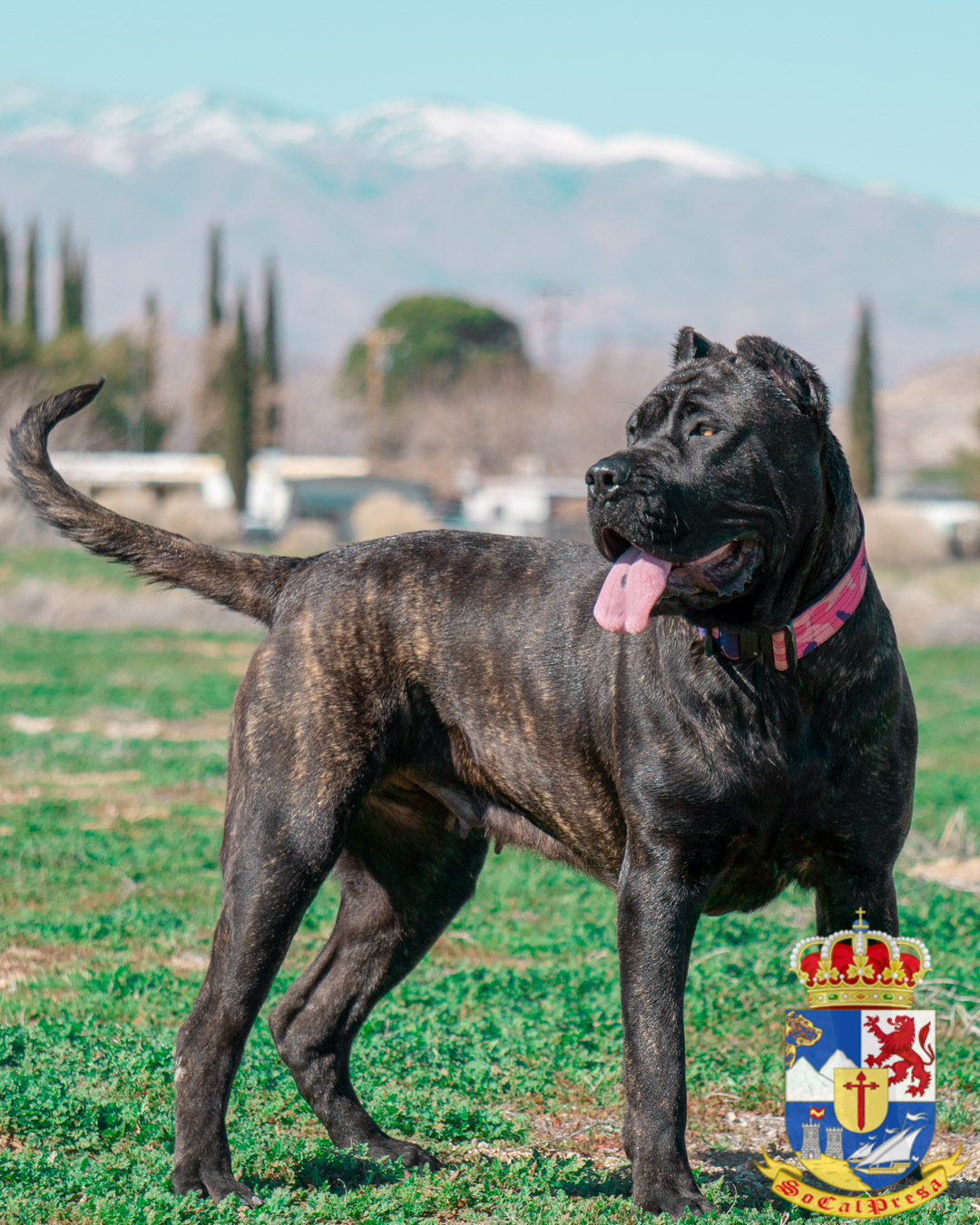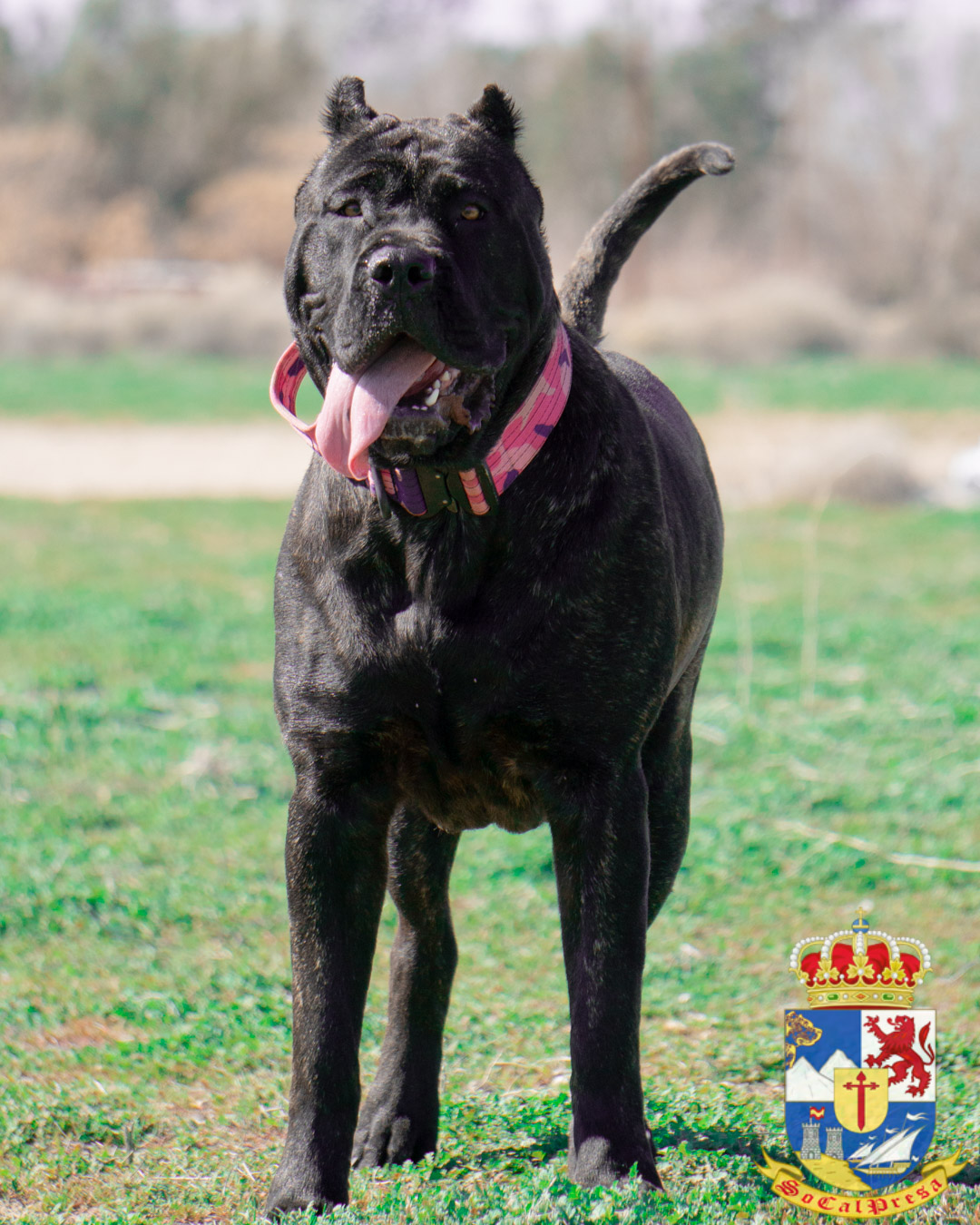
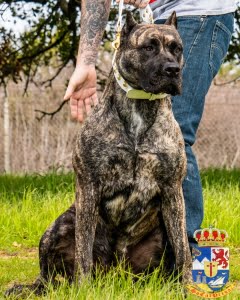
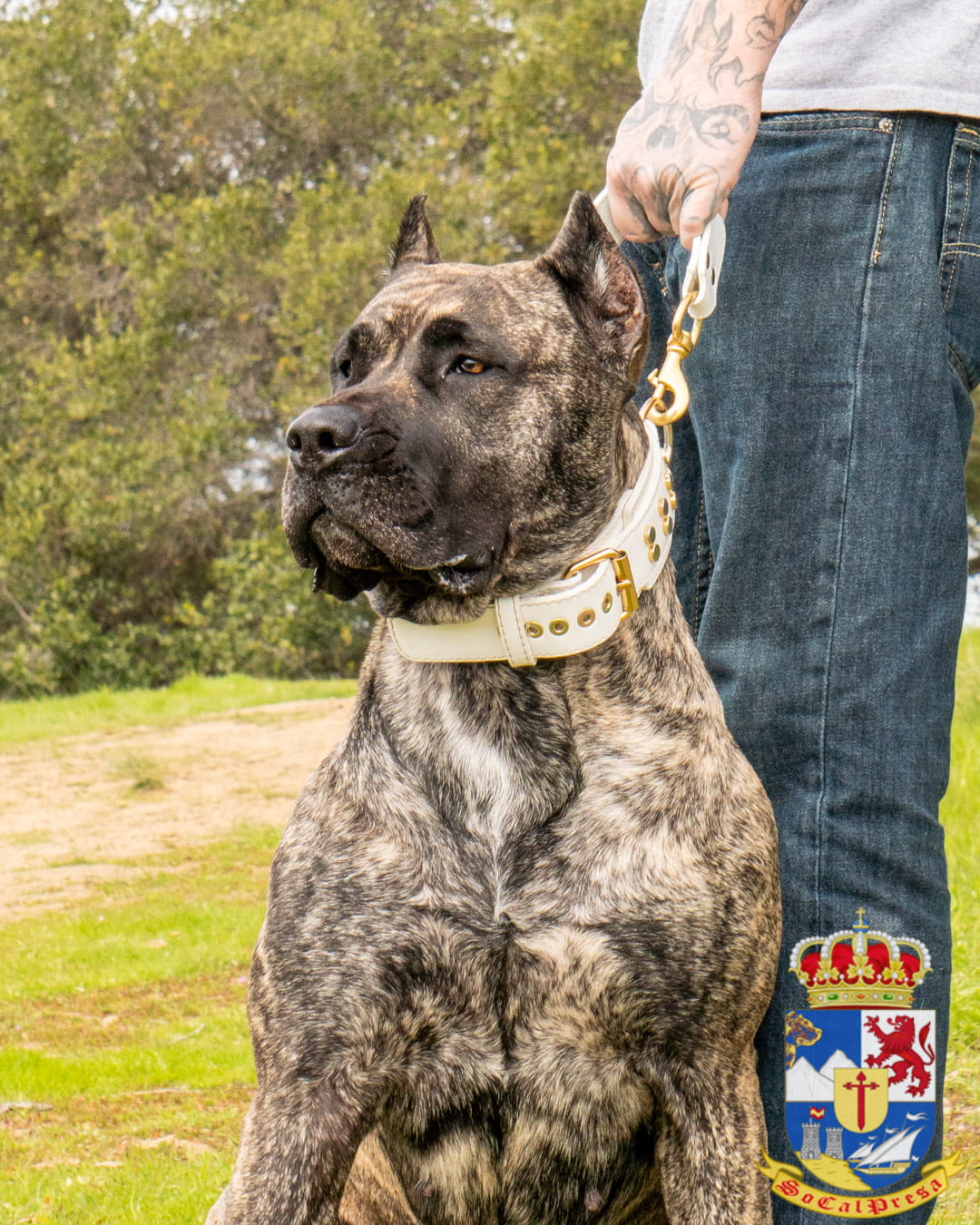
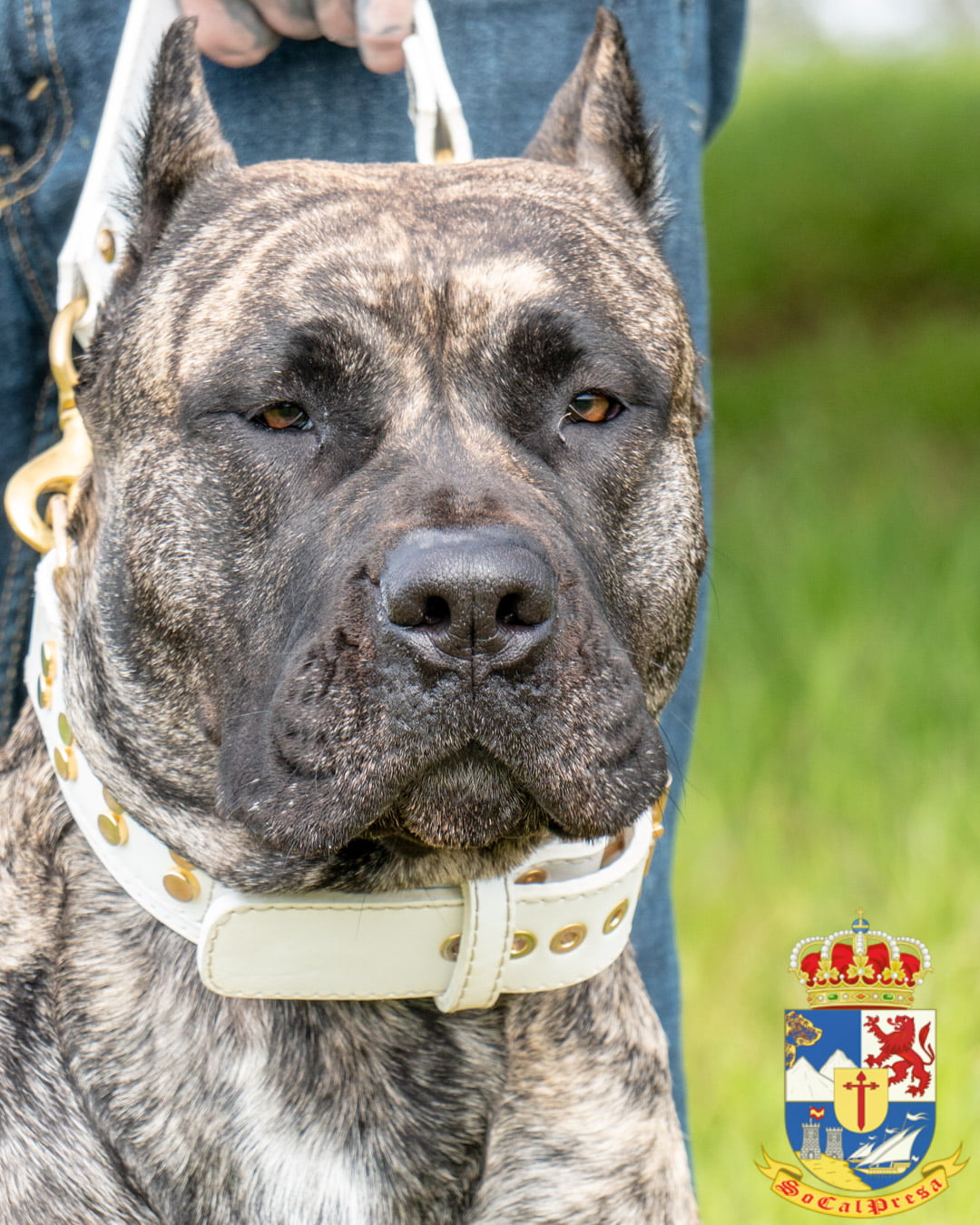
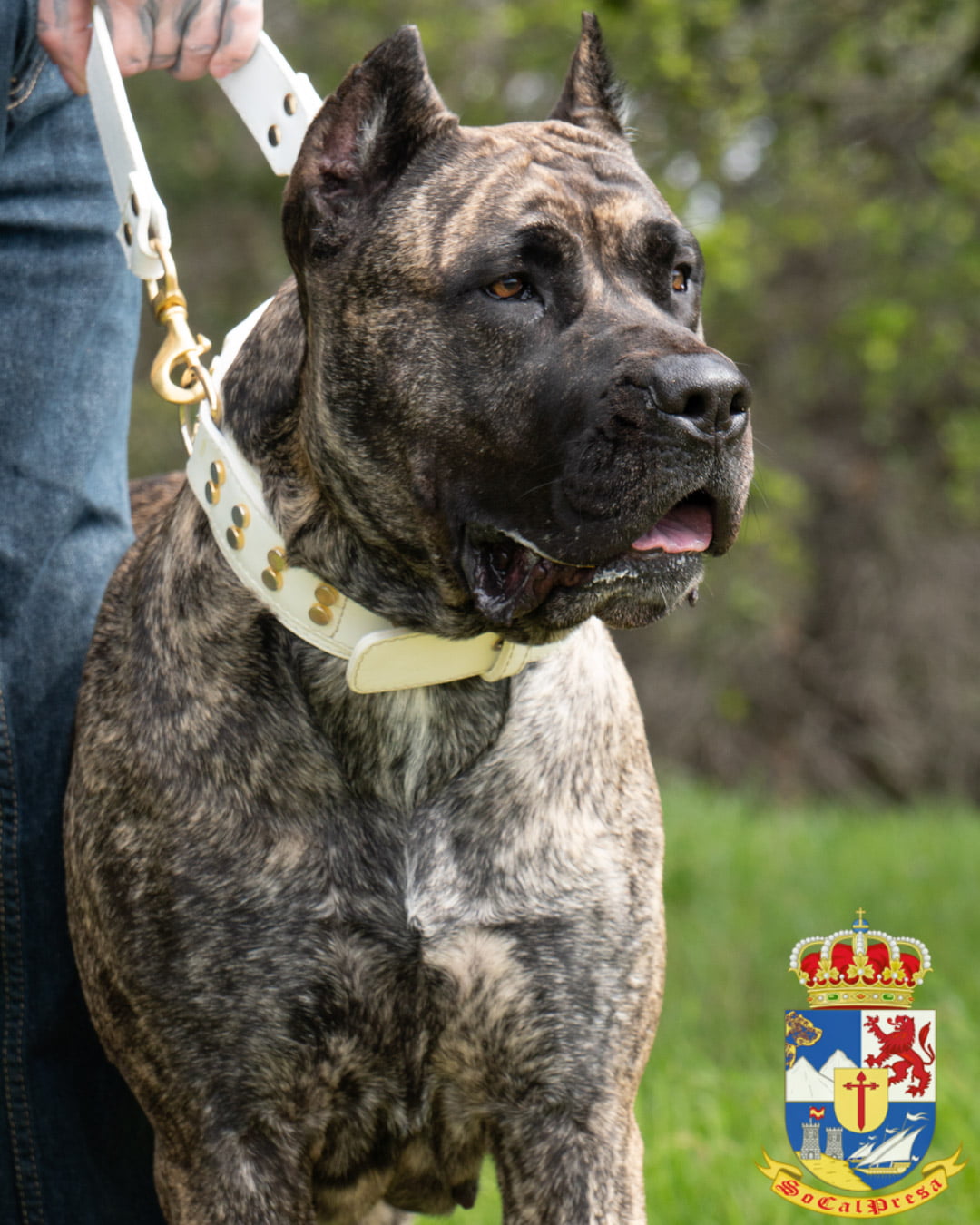
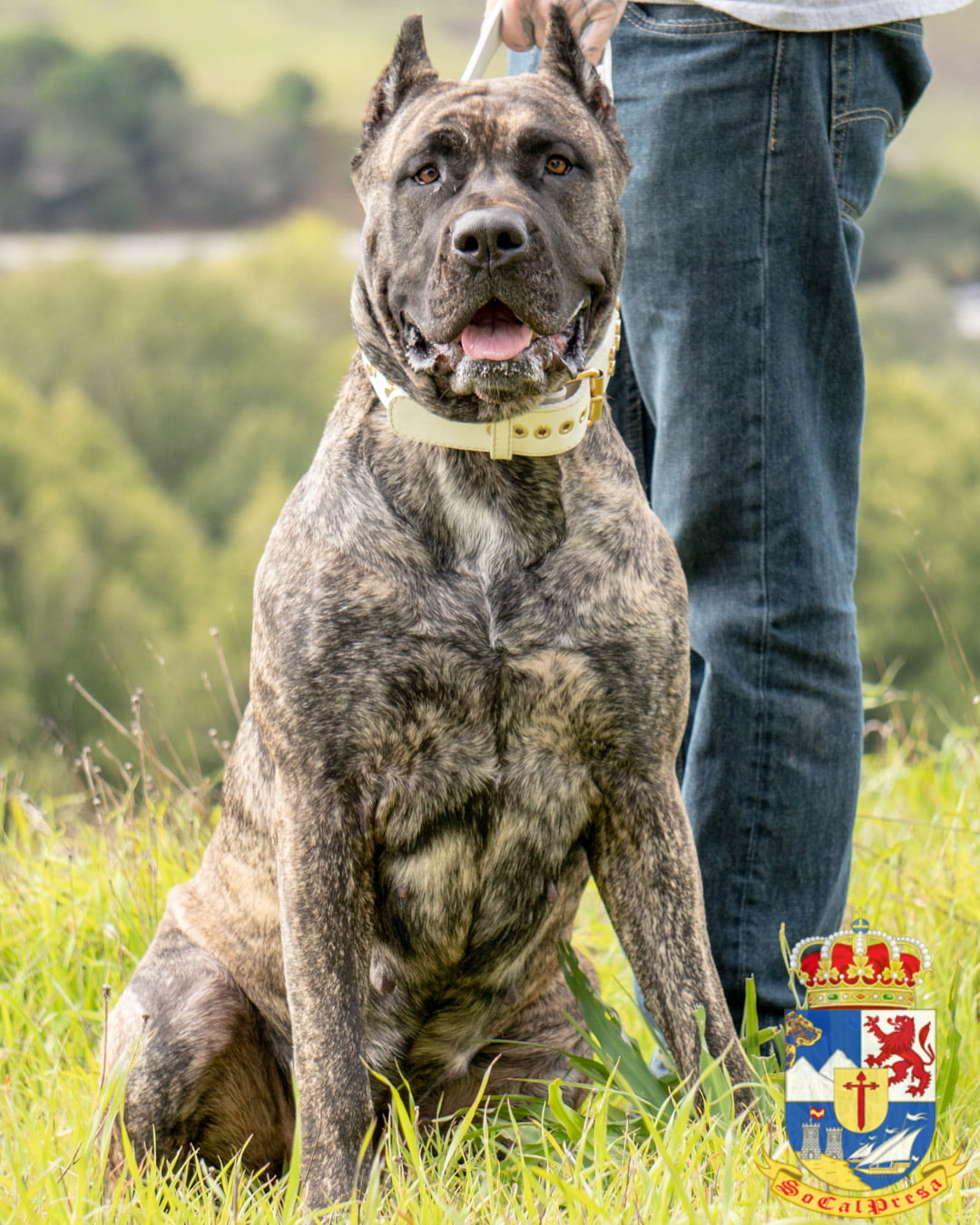
SoCalPresa Luna - Brindle Female Presa Canario
Dam: SoCalPresa Luna | Height: 26″ Withers | Weight: 120 lbs. | Color: Brindle
Daughter to Tyson and Tsavo, Luna is our next level creation that harnesses the fiery attitude of mom, and the brute force power from dad. Physicality traits of both parents are strong and maintenance free, and this is shown true here with Luna. She currently lives a one dog life as a free range Presa Canario guardian for her loving family.
A brief Testimony of her personality, directly from her family...
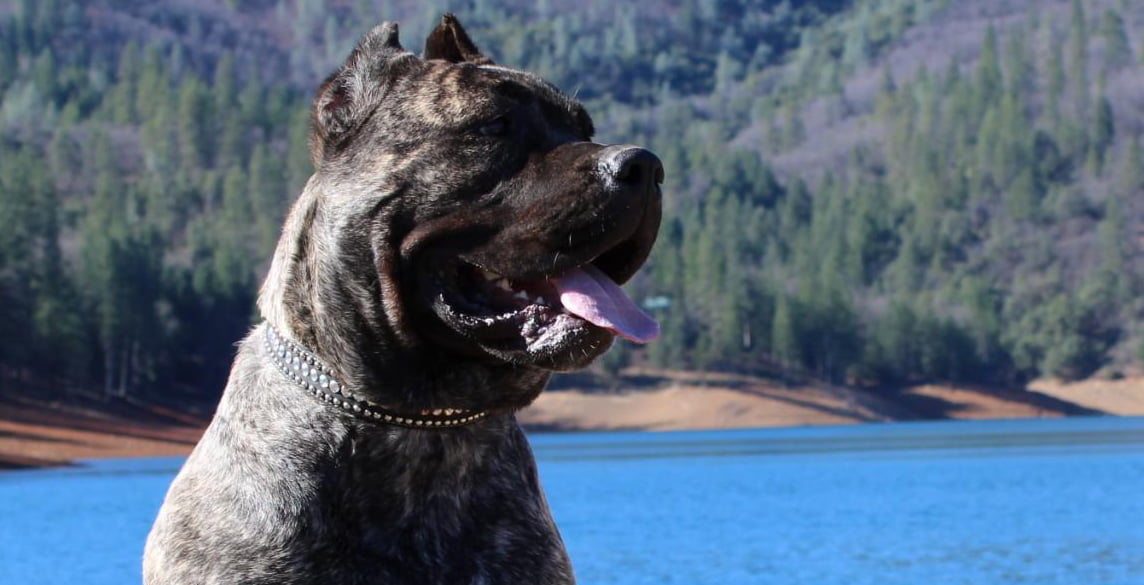
Luna is a very sweet , energetic loving girl who loves attention! , she loves getting her back rubbed and is a big daddy's girl ! She is great with our kids and very protective over them . She loves the outdoors and hanging out at the lake. She also has a high prey drive, and is a great home protector ! No need for security alarm because Luna has it covered ! She is the total package!


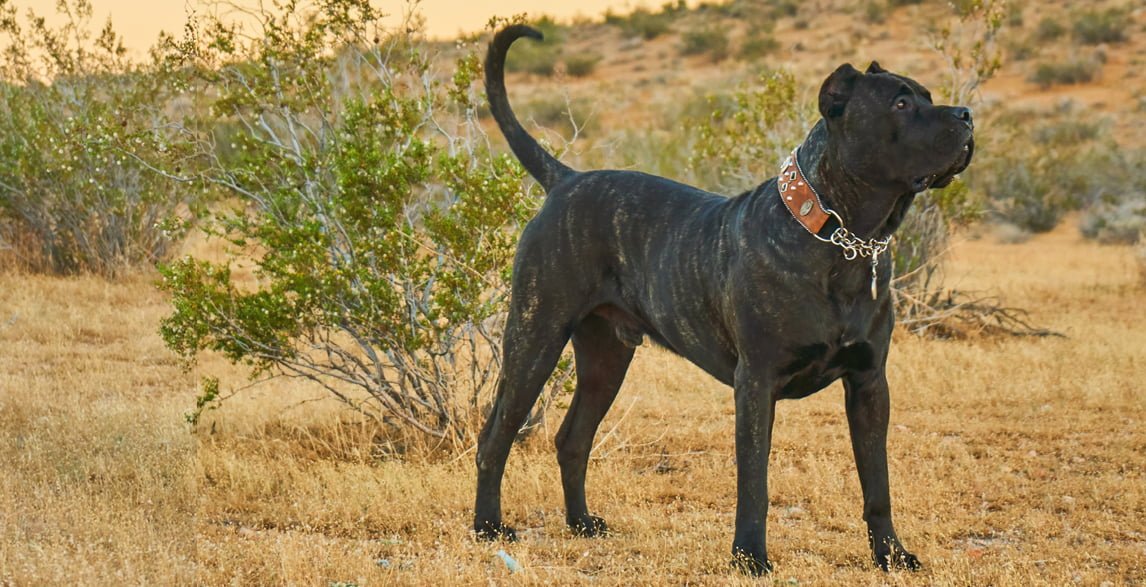
What is a Perro de Presa Canario Dog
What is a Perro de Presa Canario
The ancestors of the Perro de Presa Canario were probably brought to the Canary Island by the Spanish Conquistadors, and coexisted with indigenous cattle 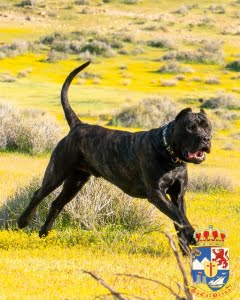 dogs from the beginning of the fifteenth century. These dogs served many purposes. They guarded the farms, helped catch and hold cattle, and exterminated wild or stray dogs. In the 1940s, the breed began to decline in numbers. It was revived again in the 1970s, when reputable breeders developed and bred Presas true to their original size and character.
- The Spanish breed club, el Club Espanol del Presa Canario, was founded in 1982.
- In 1989, the Spanish Royal Canine Society accepted the standard for the Presa Canario.
- Date of acceptance on a provisional basis by the FCI - Federation Cynologique Internationale was 2001.
- Recognized by UKC- United Kennel Club on January 1, 2003.
General Appearance
The breed is also characterized by a sloping topline (with the rear being slightly higher than the shoulders). Another characteristic of the breed is the shape of 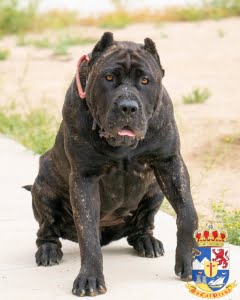 the paws (cat foot) and the catlike movement of the animal. The body is mesomorphic, that is, slightly longer than the dog is tall, contributing to the feline movement. The Presa Canario is a moderately large, powerfully constructed dog with a harsh-textured, flat coat. The head is massive and cuboid. Ears are set just above the line of the eye and may be cropped, naturally pendent or rose.
The body of the Presa Canario is slightly longer than its height at the withers, with a broad, deep chest, but females may be slightly longer and possess somewhat less rib spring than the males. Skin is thick and elastic. The distance from the withers to the elbow is roughly equal to the distance from the elbow to the ground. The tail is very thick at the base, and tapers to a point. The tail is moderately high and reaches to the hock. The overall impression is that of an imposing, solid guard dog.
The coat is short with no undercoating and slightly coarse to the touch. The coat comes in all shades of fawn and brindle. The acceptance of the black coat is a point of contention among connoisseurs, as it is allowed by the AKC/FSS, UKC and UPPCC standards, but not by the FCI or FCI standards. White is allowed up to 20 percent and is most commonly found on the chest and feet, and occasionally on a blaze on the muzzle. The breed standard requires black pigmentation and dogs should have a black mask that does not extend above the eyes. The breed is renowned for its minimal shedding.
Characteristics
The essential characteristics of the Presa are those which enable it to drive and hold cattle, and to guard its home and family. These tasks require a powerful, agile, courageous dog with a large head and powerful jaws. The Presa is extremely affectionate, docile and well behaved with its owner and family, but is wary of strangers and aggressive with other dogs.
Serious Fault: Unstable temperament
BREED STANDARD FOR THE PERRO DE PRESA CANARIO (Official Translation of the Breed Standard of the Club Espanol de Presa Canario) 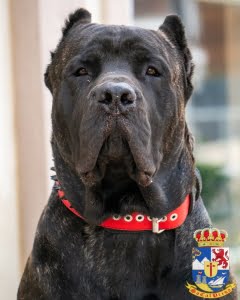
Aspects considered by judges:
I. BREED NAME AND SYNONYM
Name: Presa Canario (in Spanish) Synonym: Perro Baste and Verdino for brindled specimens.
II. ORIGINS AND DIFFUSION OF THE BREED
Molossoid dog, native to the islands of Tenerife and Gran Canaria, in the Canary Archipelago, where it was originally bred for fighting purposes. Basically, the Presa dog is the result of crossbreeding between the Bardino or Majorero from the island of Fuerteventura and molossoid dogs that were introduced to the islands from abroad. Its fiery temperament is inherited from the Bardino, a pre-hispanic, hard-working and aggressive cattle dog, widely distributed throughout the islands. The resulting crossbreed has a black mask and a brindled or fawn coat with white spots. A few decades ago, a group of breeders began the process of recovering the breed, drawing on tradition and their experience. Since then, the Presa Canario has been carefully bred and widely promoted.
III. GENERAL APPEARANCE AND CHARACTER
Physical Description: Of medium height, eumetric, straight profile. Robust and well proportioned, mesomorphic, the body being longer than the height at the shoulder, more so in females. The head is large, square and wide-skulled. Slightly flaccid overlapping flews. Black mouth lining. Strong teeth, wide apart, generally fitting. Chestnut-colored eyes of medium size. Ears set high. Round, powerful, muscular neck with thick fur and loose skin. Slight dewlap. Short, straight back Wide tail base. Chest wide and deep. Stomach slightly updrawn. Forequarters straight, large bone and strong cat feet. Powerful, muscular hindquarters "with moderately angled stifles, strong cat like feet, rear slightly longer than front feet. Thick, elastic skin. Short slightly rough hair, without an undercoat. Coat in brindled specimens should be fawn and black with black mask.
Character and Temperament: Powerful appearance, severe expression. Especially suited to protecting, guarding duties and traditionally used for herding cattle and dog-fighting. Impetuous temperament. Low, deep bark. Obedient, reliable family protector, unfriendly towards strangers.
IV. MORPHOLOGICAL DATA
- Height at shoulder: Males: 61 to 66 ems. (24 to 26 in.). Females: 57 to 62 ems. (22.5 to 24.5 in.)
- Head: Brachycephalic type. Cubic tendency. Large and solid. Skull to face ratio 6:4. Furrow not accentuated.
- Skull: Convex in ante posterior and transversal direction. Zygomatic arches very pronounced, greatly developed jaw and cheek muscles. Marked depression between frontal lobes.
- Muzzle: Shorter than the length of the skull, normally about 40% of the total head. Very wide. Straight or slightly convergent wrinkle.
Lips or flews: Fairly thick and fleshy. Upper flews not too pendulous, but forming an inverted "V" when viewed from the front. Inner lips may be pinkish but preferably dark. - Jaws: Teeth with very strong wide base, generally fitting. Slight prognatism (slightly undershot) acceptable, given the dog's origins. Bite typical of molossoid dogs. The absence of one or two premolars is not a fault, since the dog's function depends on its canines and incisors which should be well in line and well placed.
- Palate: Well-marked pinkish grooves.
- Eyes: Slightly oval. Well separated. Black eyelids. Color varies with coat from medium to very dark brown.
- Ears: Hanging when complete. Medium sized, set high and wide apart. Generally risen. If, in accordance with tradition, they are cut, they stand erect or semi-erect and are triangular in shape. Full eared dogs compete on equal terms with others.
- Neck: Round, straight, solid and highly muscled. Shortish between 18 and 20 ems. (7-8 ins.). Loose skin below the throat forms a medium ridge.
- Forequarters: Perfectly straight, well boned, set well apart, powerful musculature. Elbows turned neither in nor out. Compact cat-like feet. Strong nails, either black or light according to the coat.
- Body: Longer than the height at the shoulder by about 20%. Tide chest, deep brisket level with elbows, with marked pectoral muscles. Thoracic perimeter at least 30% greater than shoulder height. Well-arched rib cage, almost cylindrical.
- Dorso-lumbar line (from withers to loin). Straight, ascending slightly to the loins. Slight saddle effect just after the withers
- Loin: Straight, medium length and wide. Normally 1.5 ems. (.6 ins.) higher than the withers.
- Flanks: Unpronounced.
- Tail: Set on high, flexible, strong at the root and tapering to the hocks. At rest there may be lateral deviation. In action, elevated saber-like with the tip pointing forward but not curled.
- Hindquarters: Hindlegs powerful, straight when viewed from the side or front. Very muscular second thighs, unpronounced angles. Cat-like feet. No spur normally. Hocks low and neither sickle nor cow. The presence of a spur is a fault but does not merit disqualification.
- Coat: Hair. Short all over, generally denser at withers, throat and top of loins. No under hair. Compact tail hair. Rough-looking, coarse.
- Color: Colors of brindle, from very warm dark colors to gray or very light brown or blonde. Full range of fawn to sand-colored.
- Occasionally there are markings around the neck or legs, where white marking is least desirable.
In general, there are more or less long white markings on the chest. The mask is always dark and may blend around the eyes.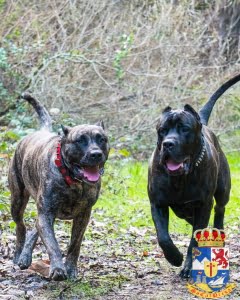
Weight: Average male: 45-57 kgs. (100-125 lbs.). Average female: 40-50 kgs. (88-110 lbs.).
Defects:
Slight defects (1)
• Presence of spur.
• Poor nose pigmentation.
• Excessive prognatism.
• Specimens with slight hound-like appearance
The gait, or movement, of the dog is assessed by the judge when the dog is competing.
• Poor mask.
• Sickle legged or cow hocks.
• Unbalanced character.
• Frail or thinnish appearance.
• Cranio-facial disproportion.
• Curled tail, of equal thickness all the way, amputated or mutilated
Total disqualification (2)
• Monorchid, cryptorchid or castrated specimens.
• More than 20% white markings.
• Totally unpigmented nose or mouth lining.
Most important aspects:
1. Head (typicality): Massive. Muzzle well filled out. Dark colored eyes, well separated. Stop defined, but not too abrupt. Straight nose, not arched. Upper lip not withdrawn Sufficient wrinkle. Well aligned bite, but not level. Reject specimens with level bite.
2. Body: Rectangular, longish, medium sized. Reject height that is neither functional nor characteristic. Well-sloped shoulders. Very arching ribs. Chest deep and the wider the better. Very well-developed pectorals. Separate elbows, not turned out. Strong-boned. Loins higher than withers & well developed. Slight angulation of hind legs.
Sources -
-Perro De Presa Canario: Special Rare-Breed Edition : A Comprehensive Owner's Guide
-United Kennel Club
-Fédération Cynologique Internationale
The standard was clearly indispensable. Without it, it was practically impossible to "picture" the new Presa, which had been bred since the 1500's. The  standard was to become the guide for breeders. In most cases, a breed standard illustrates an imaginary dog, because the "perfect dog" that the standard describes does not exist in Nature. Mother Nature does not allow perfection in a living creature; thus, breeders attempt to produce a dog that is as close to perfection as possible. In the case of the new Presa, the standard indeed was used to recreate the breed, not just reproduce better typical specimens from existing typical specimens. That a breed standard is but a written document and, by its very nature, subject to interpretation by each person-breeder, judge, trainer, owner who reads it, complicates the matter greatly. Thus, each breeder's interpretation, good, bad or indifferent, is in his mind's eye when he is selecting dogs for his own breeding program. Worse yet, and this is a frequent and regrettable scenario, many Presa breeders today disregard the standard entirely when planning a breeding. The result is that the puppies produced, and the whole of a breeder's line, lack type and genetic consistency. Thus, today there are many different types of Presas around the world: some of which mirror the breed standard quite accurately, and others that bear no resemblance whatsoever, in appearance or behavior, to the Presa described in the breed standard. Over the past quarter century, many breeders have continued to breed their Presas to other breeds that are imported into their countries. This
  only yields Presas that do not look like Presas and do not act like Presas, and thus are not Presas at all! By breeding and selecting according to the standard, we are shaping the Perro de Presa Canario. Yet, a breed is not a breed until it is "officially recognized" by a national kennel club. In the Canary Islands and Spain, this is the Spanish Royal Canine Society (RSCE); throughout Europe and beyond, it is the Federation Internationale Cynologique (FCI), which accepted the breed in June 2001 as the Doge Canario, a name which the author and many others oppose. In the United Kingdom, the registry is known as The Kennel Club, which will likely never accept the Presa due to the country's "Dangerous Dog" laws. In the USA, where the Presa Canario has a promising future, the American Kennel Club (AKC), the United Kennel Club (UKC) and the States Kennel Club (SKC) are all-breed registries. The breed's parent club is the Dogo Canario Club of America.

Bane & Tsavo Presa Canario Puppies for Sale in California
Our long awaited litter from Bane & Tsavo is here! These little monsters impeccable and perfect structure. These babies are loving and fierce as a Perro de Presa Canario should be! As all our Perro de Presa Canario line, these babies will be the best family companions and guardians you can purchase. Colors range from heavy brindle to a darker black brindle with show quality coats. The mother "Tsavo" is a very active and high driven female. These naturally inherited instincts instilled in the puppies, will make them a formidable force in their adult ages.
Ready for a life enhancing Presa Canario puppy?
Click on the puppy image to view their checkout page.


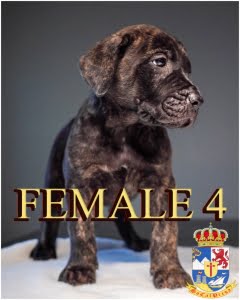

Bane x Tsavo Presa Canario Puppies at 3 Weeks of Age
-

-

-

Girl 1 -

Girl 1 -

Girl 1 -

Girl 2 -

Girl 2 -

Girl 3 -

Girl 3 -

Girl 3 -

Girl 4 -

Girl 4 -

Girl 4 -

Girl 5 -

Girl 5 -

Girl 6 -

Girl 6 -

Girl 6 -

Boy 1 (Reserved) -

Boy 1 (Reserved) -

Boy 1 (Reserved) -

Boy 2 (Reserved) -

Boy 2 (Reserved) -

Boy 2 (Reserved) -

Boy 2 (Reserved) -

Boy 2 (Reserved) -

Boy 3 (Reserved) -

Boy 3 (Reserved) -

Boy 3 (Reserved) -

Boy 4 (Reserved) -

Boy 4 (Reserved) -

Boy 4 (Reserved) -

Boy 5 -

Boy 5 -

-

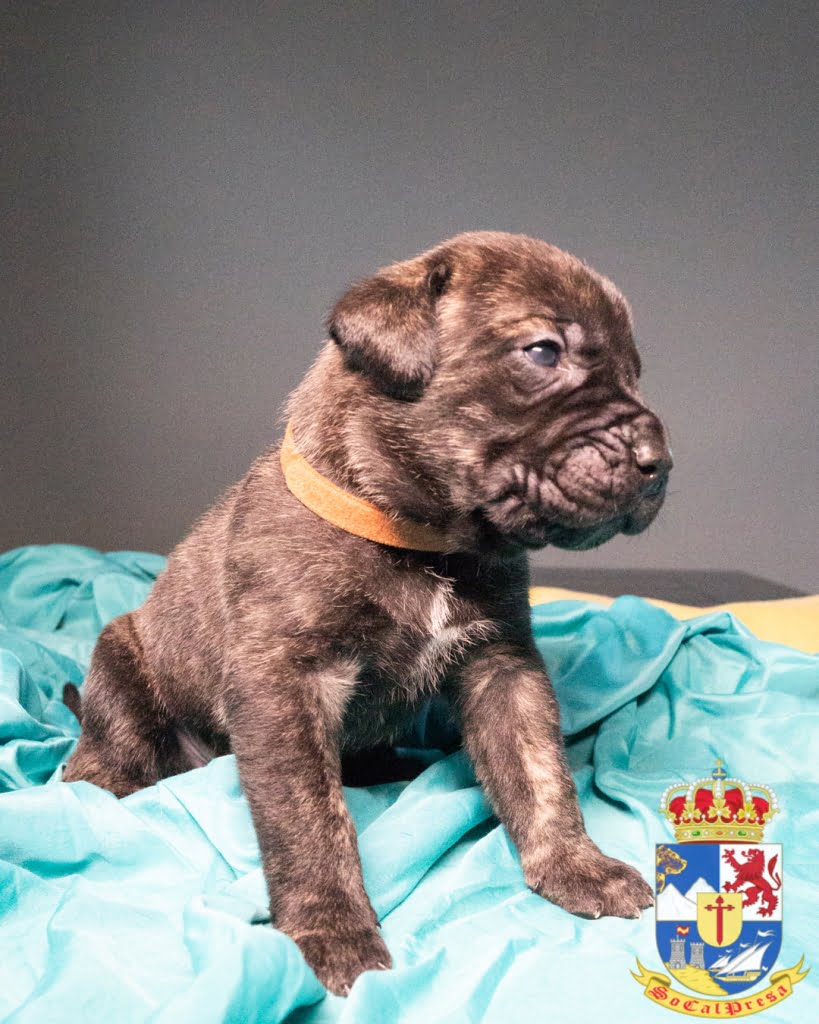
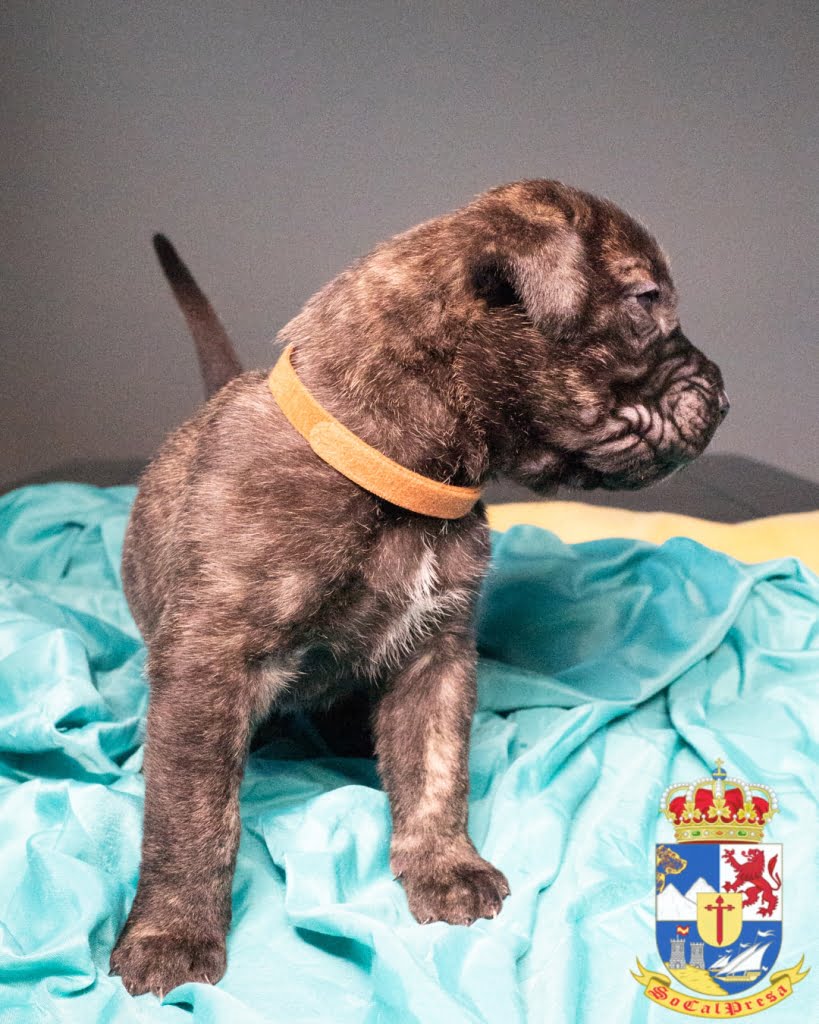
Bane x Tsavo Presa Canario Puppies at 2 Weeks of Age




Presa Canario Buying Guide for the New Dog Owner
Having a new Perro de Presa Canario dog or puppy can be challenging in many aspects. Having the right training tools, things to keep them busy, and robots to clean your floors will make your life run even smoother. Specific items geared toward your powerful puppy will help you find peace in raising them correctly.

Bane & Hash Perro de Presa Canario Puppies for Sale in California
Below are pictures from our gorgeous litter of Bane & Hash Perro de Presa Canario puppies for sale. The colors of the pup vary from Black brindle, Silver Brindle, and a very heavy brindle. All are extremely robust for this early age, and have personality and traits being a combination of their parents. These will no doubt be phenomenal family guardians and service dogs with patience, loyalty, and a fiery temperament when desired.
Ready for a life enhancing Presa Canario puppy?
Click on the puppy image to view their checkout page.


Pictures taken 8 Weeks of Age Below...

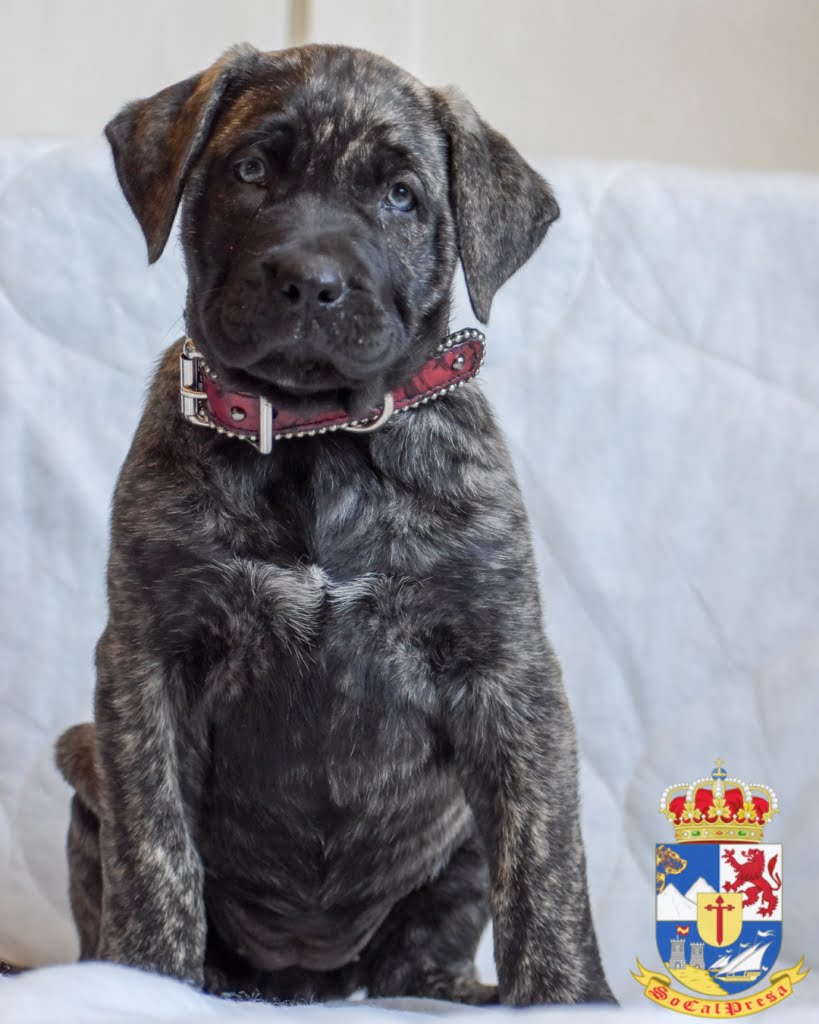


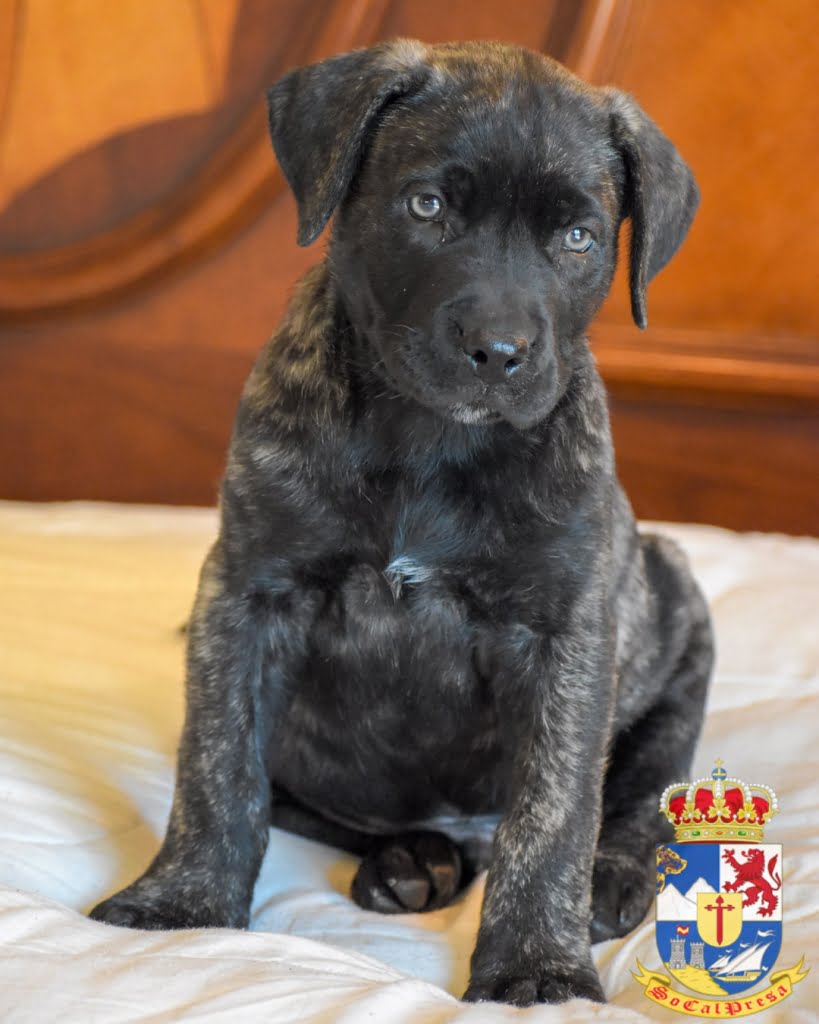


At 7 Weeks of Age Below...
Only girls shown here


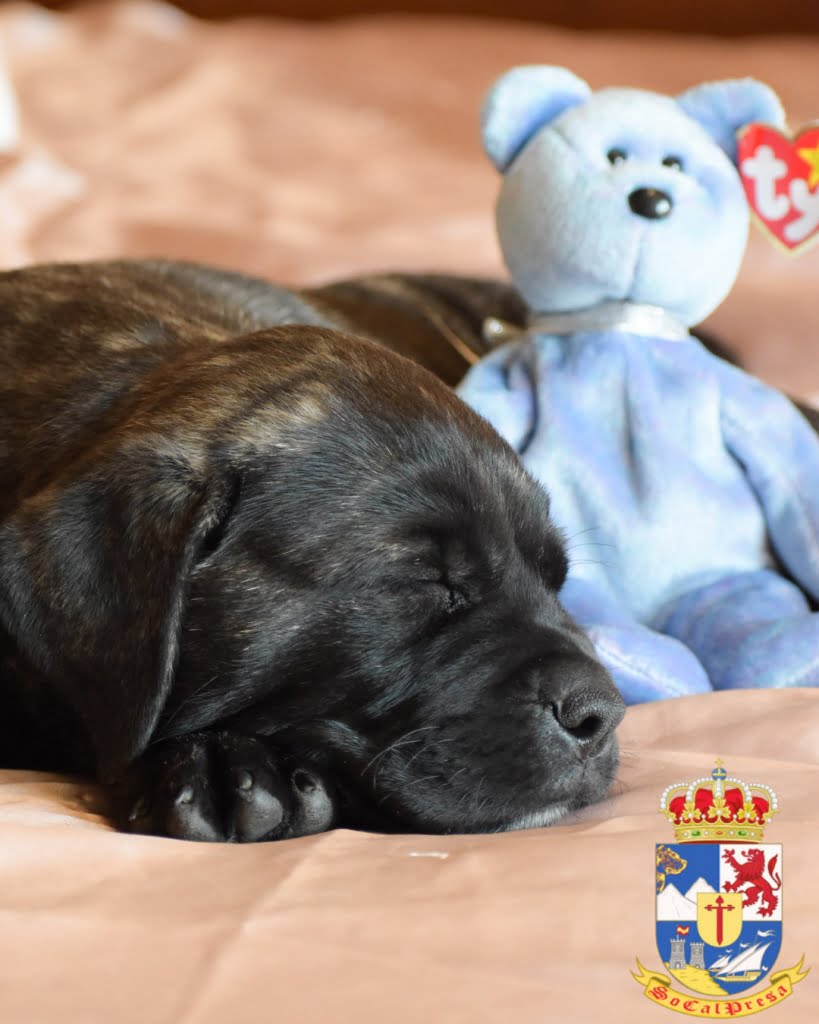


At 5 Weeks of Age Below...


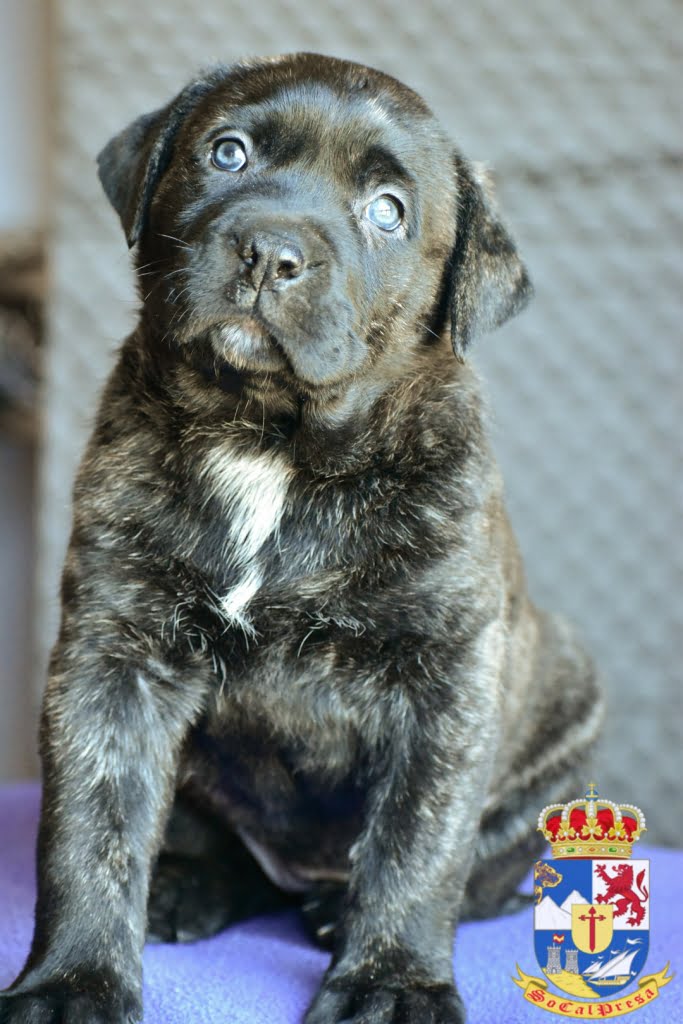


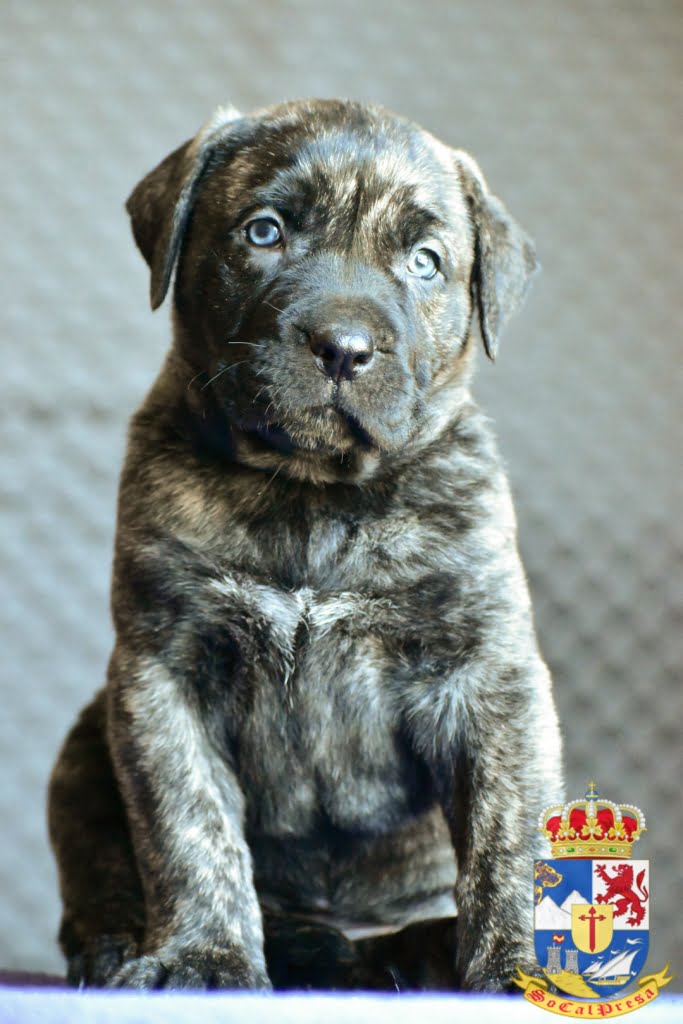


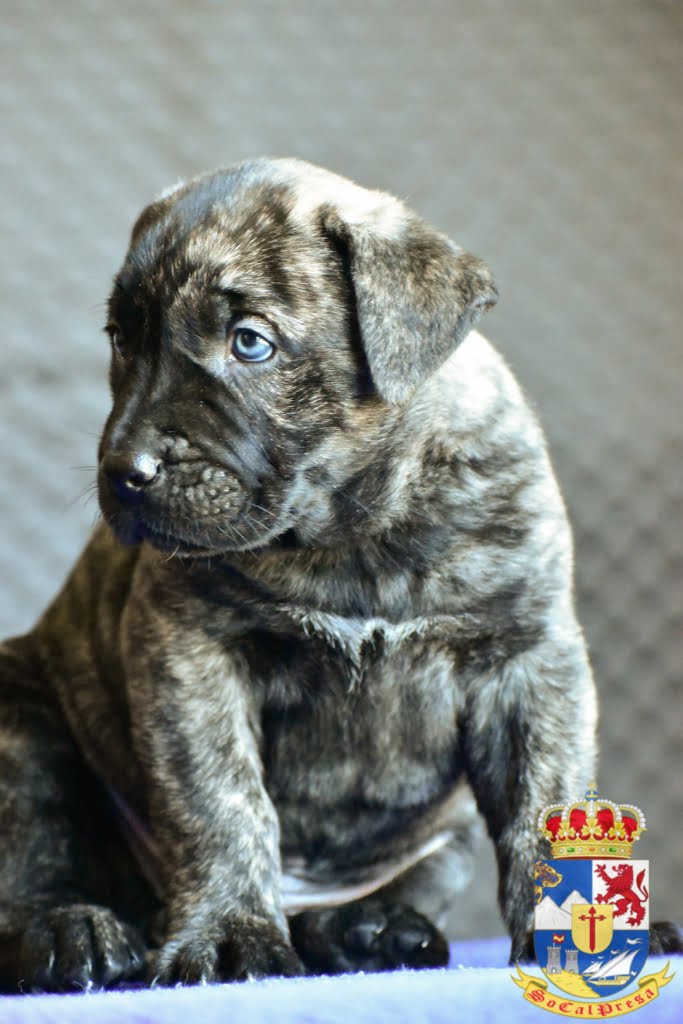


At 3 Weeks of Age Below...


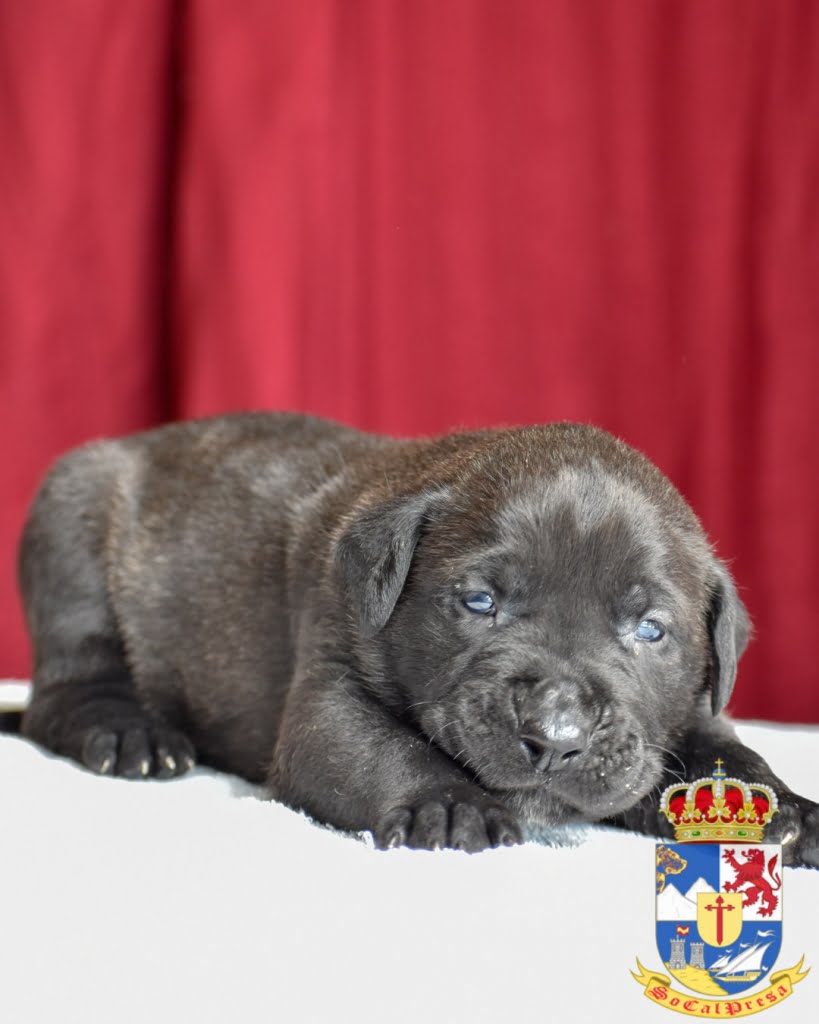


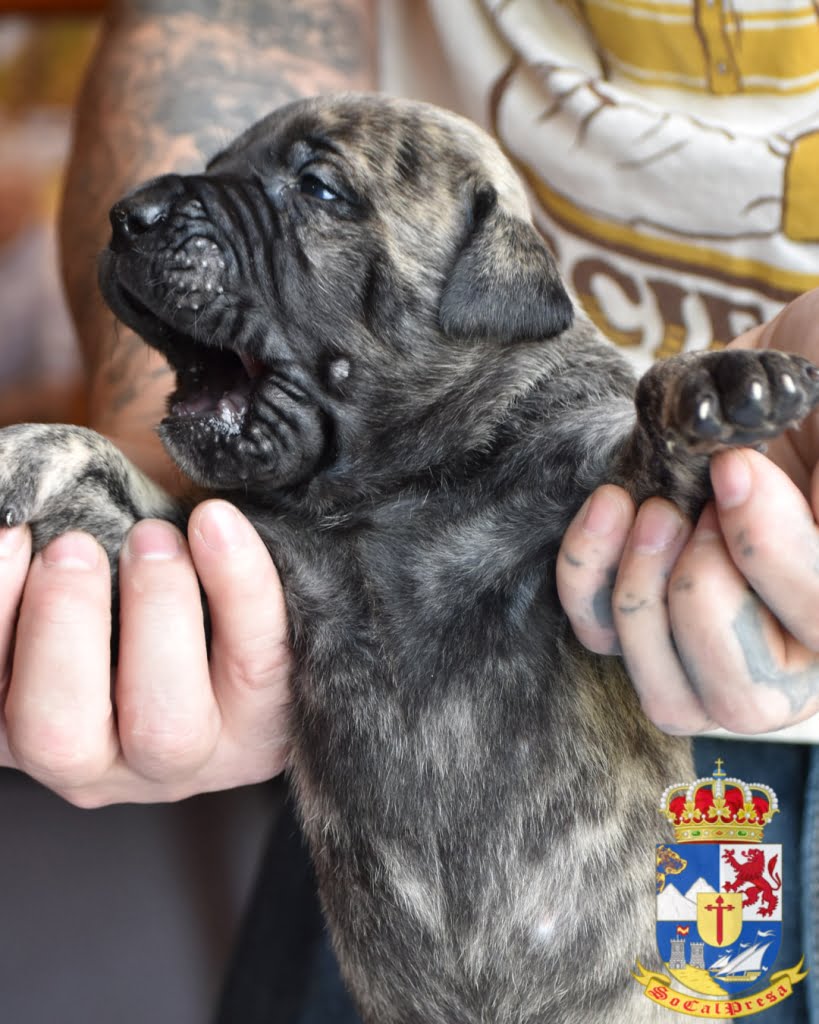
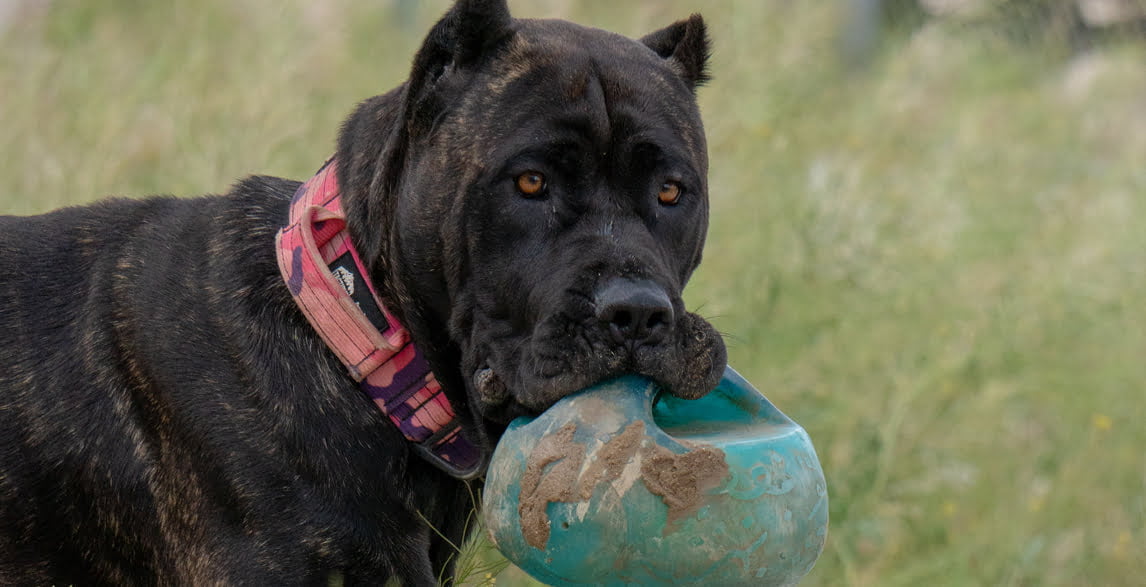
What to give your Perro de Presa Canario - Chew Toys & Treats
All new Presa Canario puppy owners should understand that their puppy and or adult dog will need to have available chew toys. Providing that positive source consistently will keep them from taking permission on other things not desired to chew on.
Spread out the toys and snacks so they do not get bored quickly, and of course watch them overall until you're certain they wont chew undesired items.
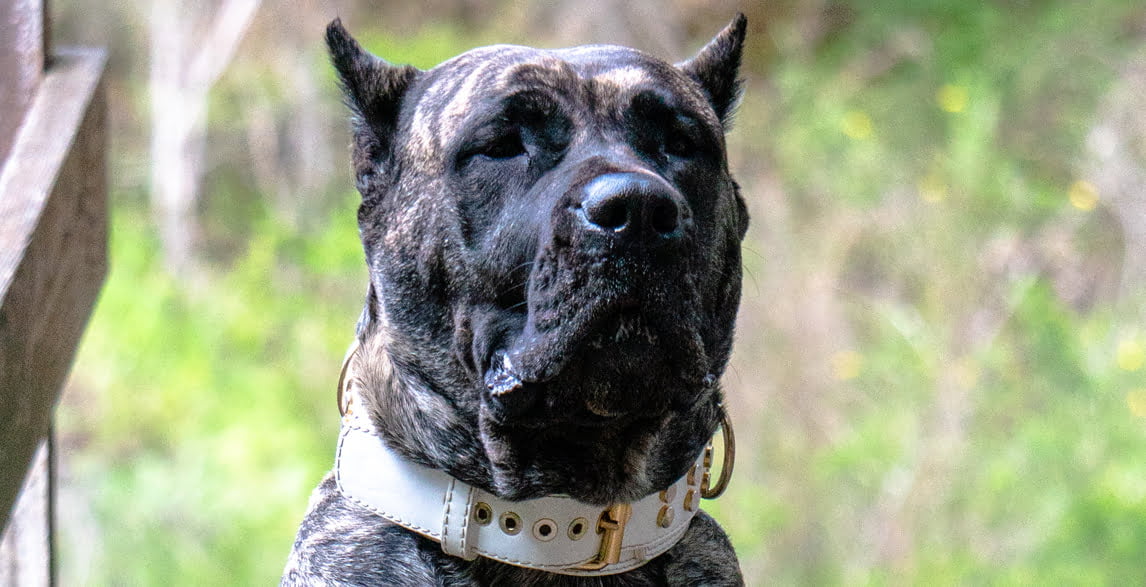
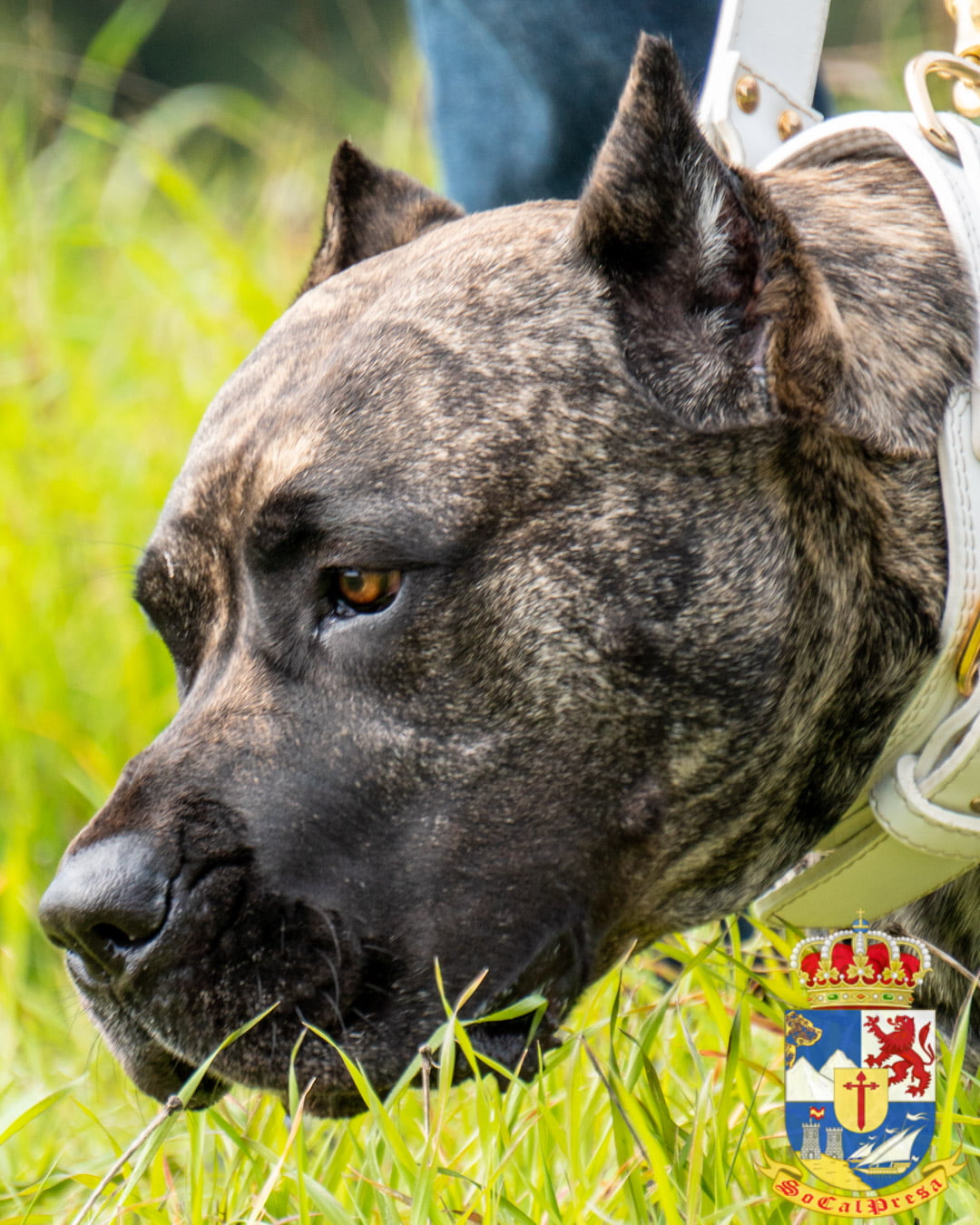
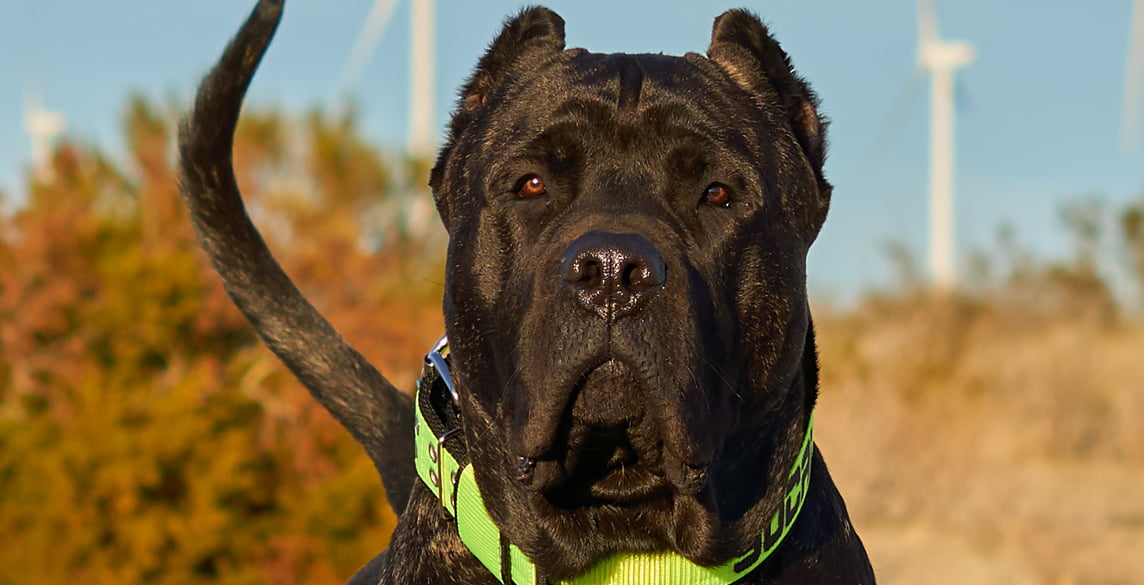
SoCalPresa Queen Hash - Brindle Female Presa Canario
Dam: SoCalPresa Queen Hash | Height: 26" Withers | Weight: 124 lbs. | Color: Brindle
SoCalPresa Queen Hash is one amazing Perro de Presa Canario dog that lives in home with her family. Being so closely bonded to the family she holds a calm but powerful demeanor overall with a fierce attitude if needed. An alpha female since birth, and continuing the fire throughout her growing. This attention getting Presa Canario female has a phenomenal coat and personality which wins over the best of us.


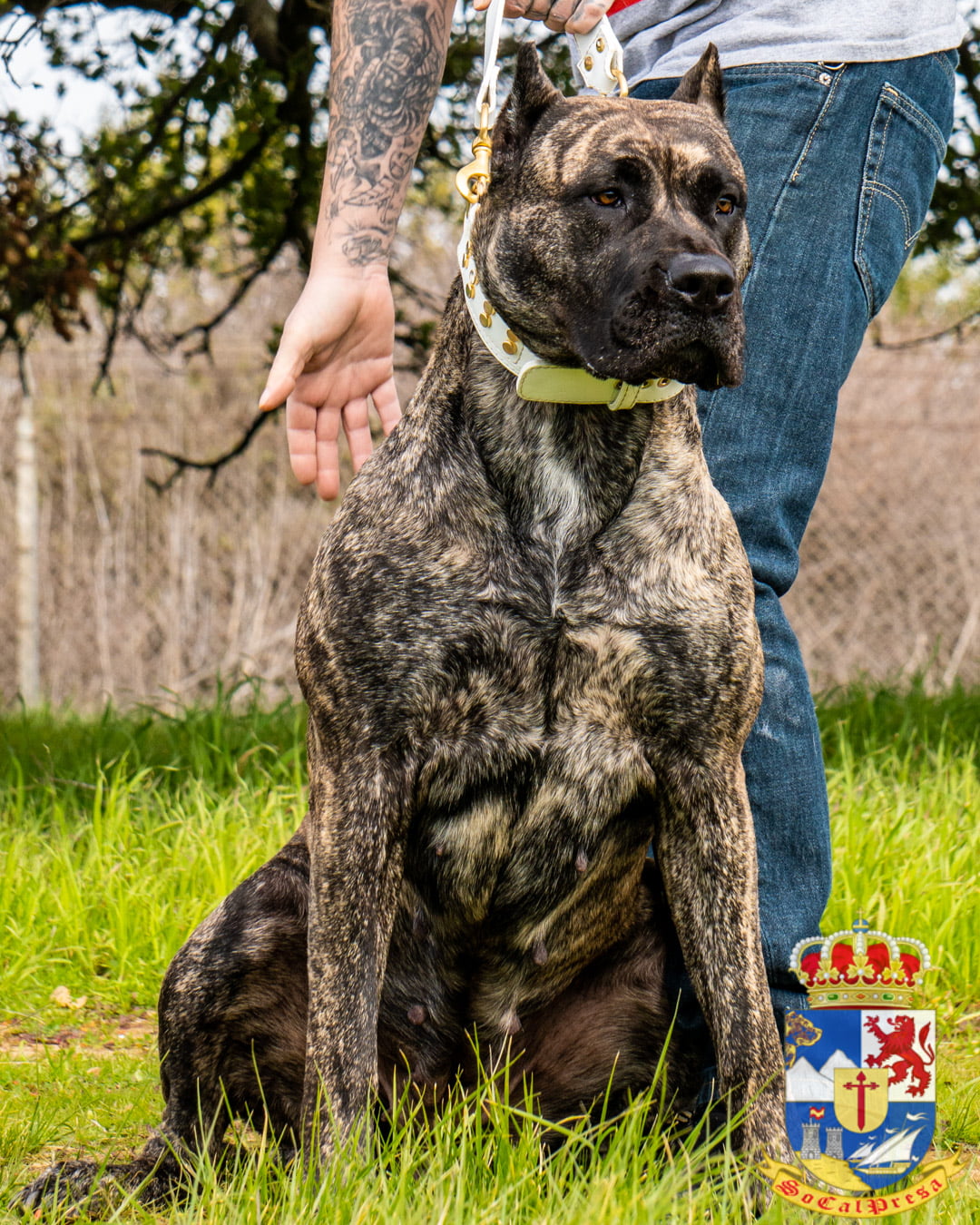
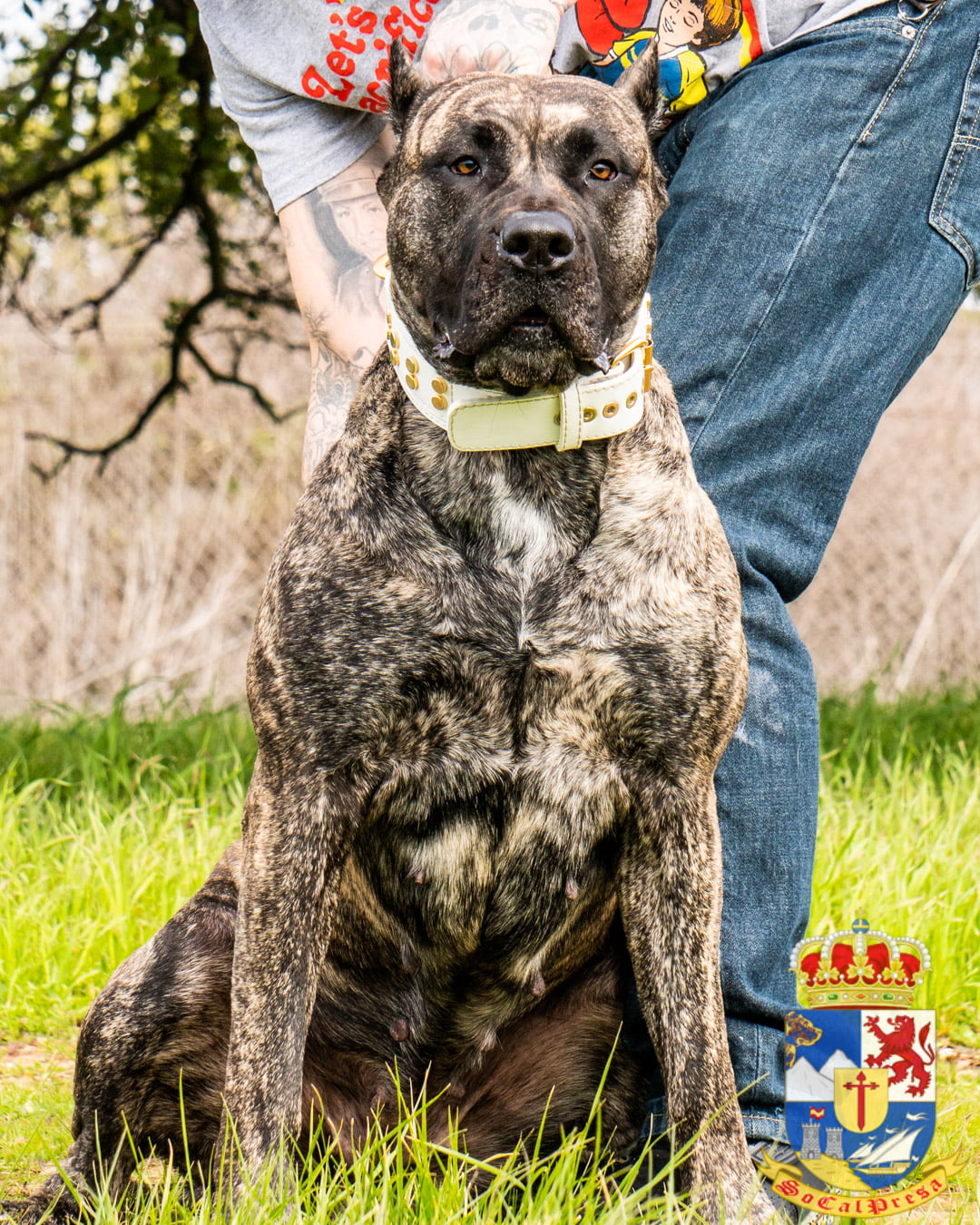





SoCalPresa El Monstro Bane - Black Brindle Presa Canario Male
Stud: SocalPresa El Monstro Bane | Height: 29" Withers | Weight: 166.2 | Color: Black Brindle
Bane is another of our proven male Presa Canario studs. He has turned out to be an impeccable family guardian. His primary role is the family guardian and has completed training for obedience and protection work. This charming face is not to be fooled with a kind one, as his current protection training will not allow to have threats near him. His overall structure is easily noticed by any onlookers and is a guaranteed head turner. Looking to get your Pepsi at the drive though filled to the top with no air? Have them get a glance at Bane and you can guarantee to have a overflowed drink spill in your car. The face of an angel can turn into the devil in an instant when a confrontation needs to be met with force. Occasionally, this puppy like to sleep on his back at night and has lucid dreams which wake up mom and dad. Overall, he keeps his family safe and happy which is required of all our Presa Canario dogs.
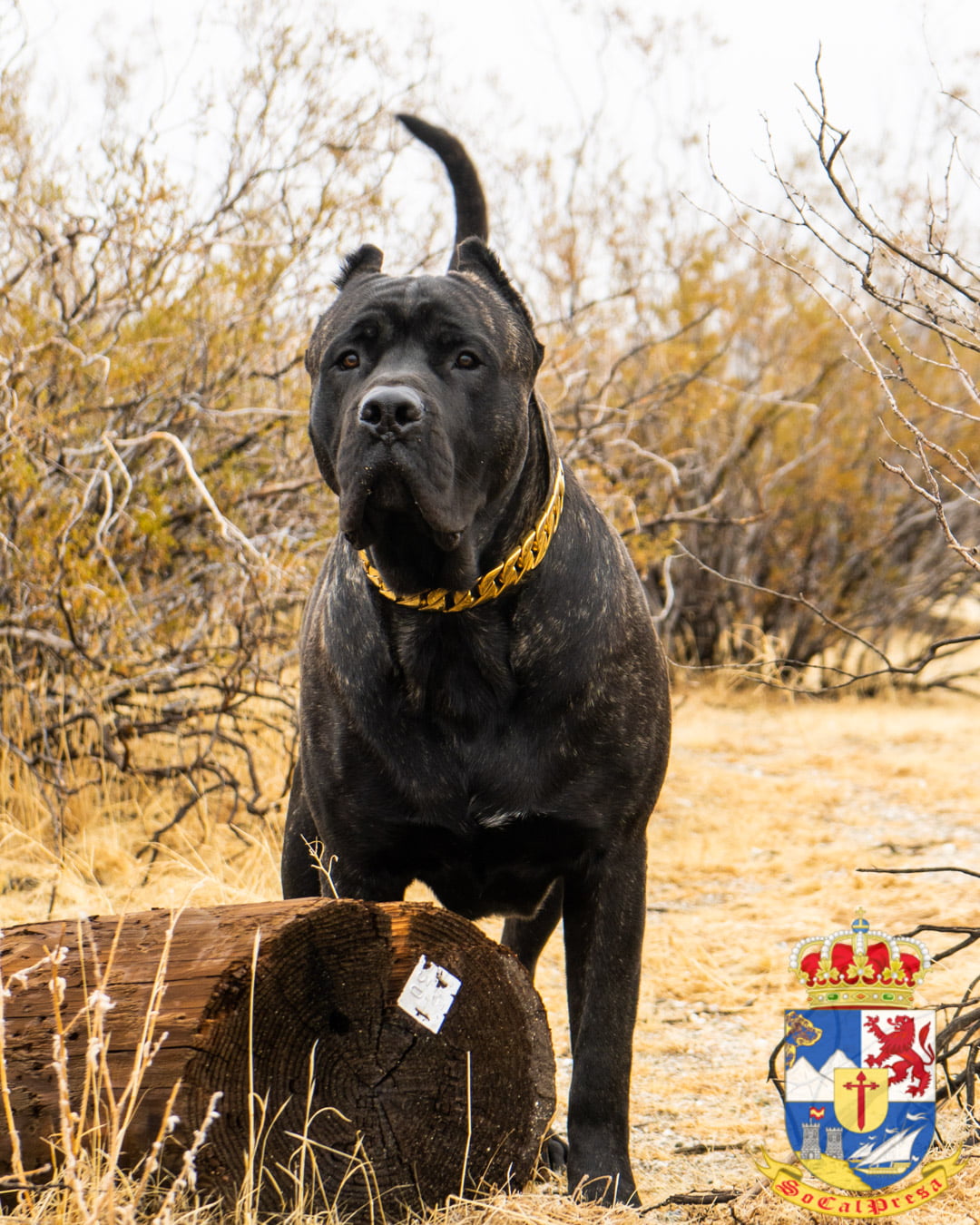


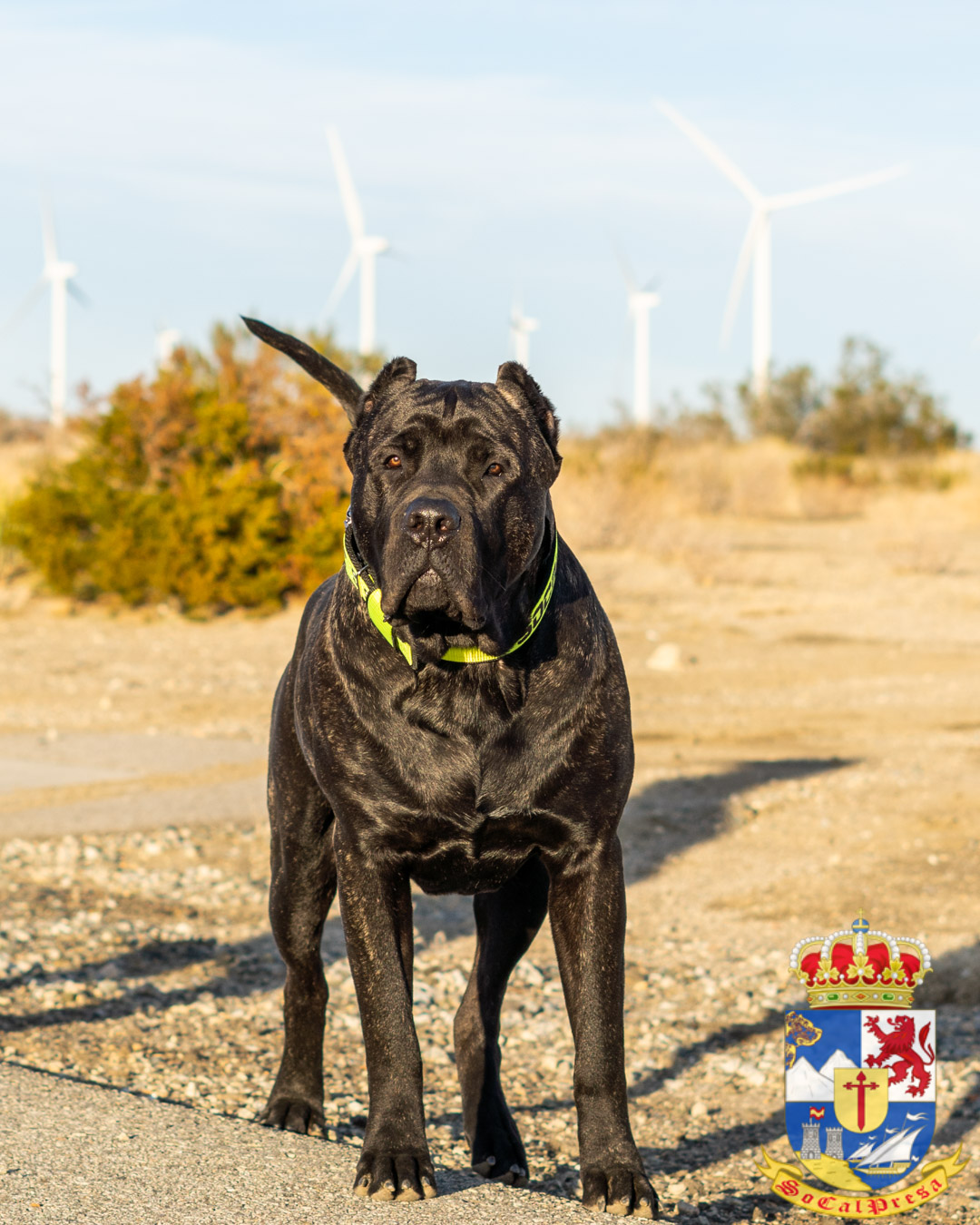




SoCalPresa Negra La Pantera - Black Brindle Presa Canario Female
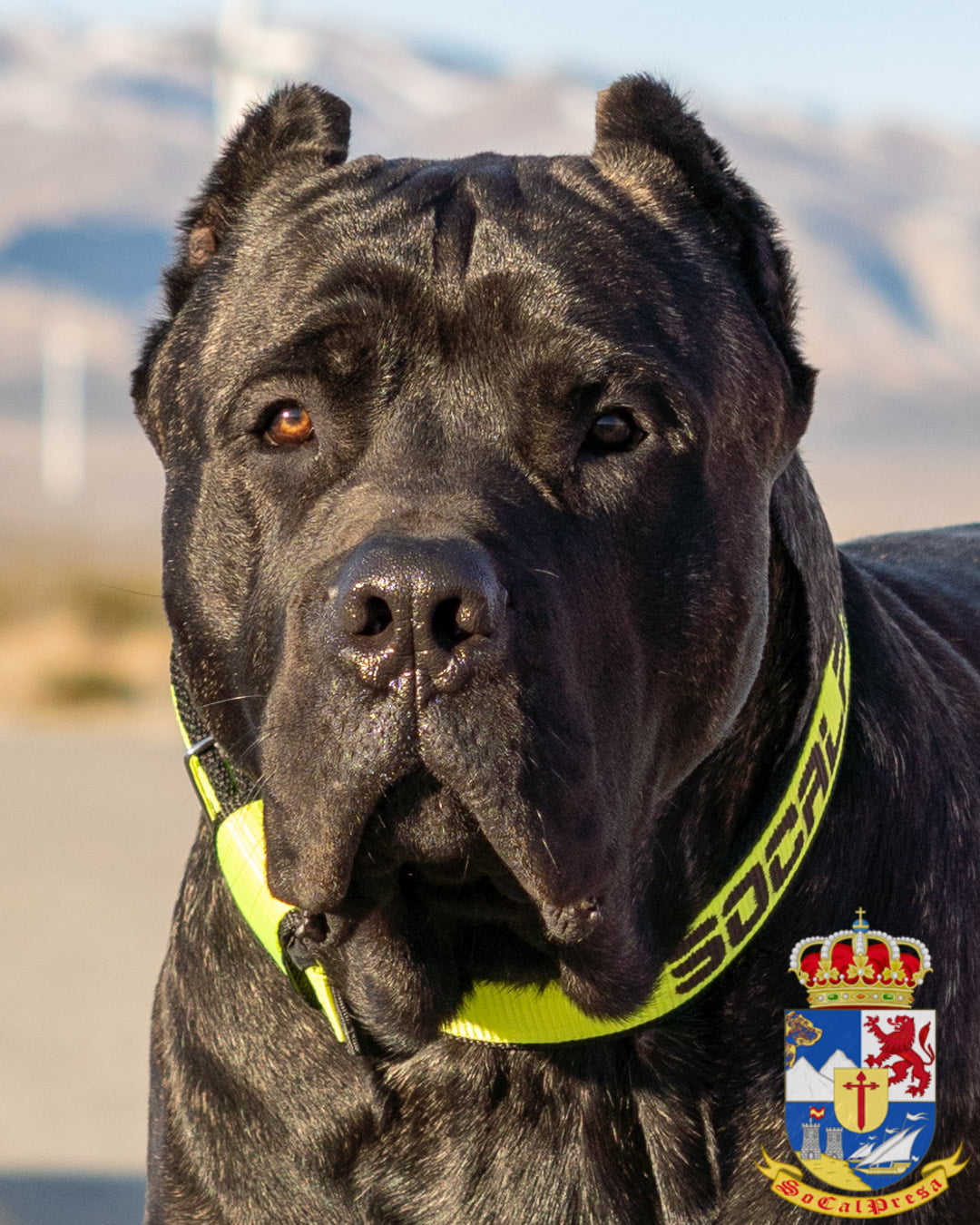
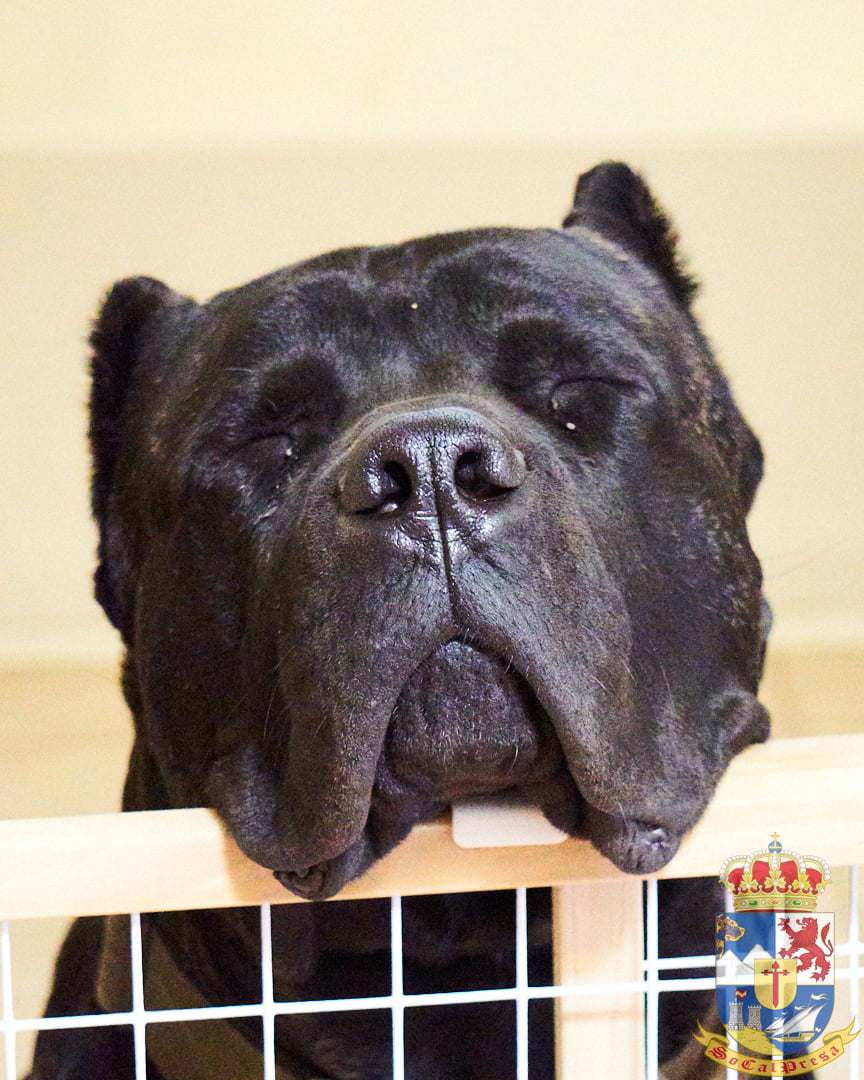
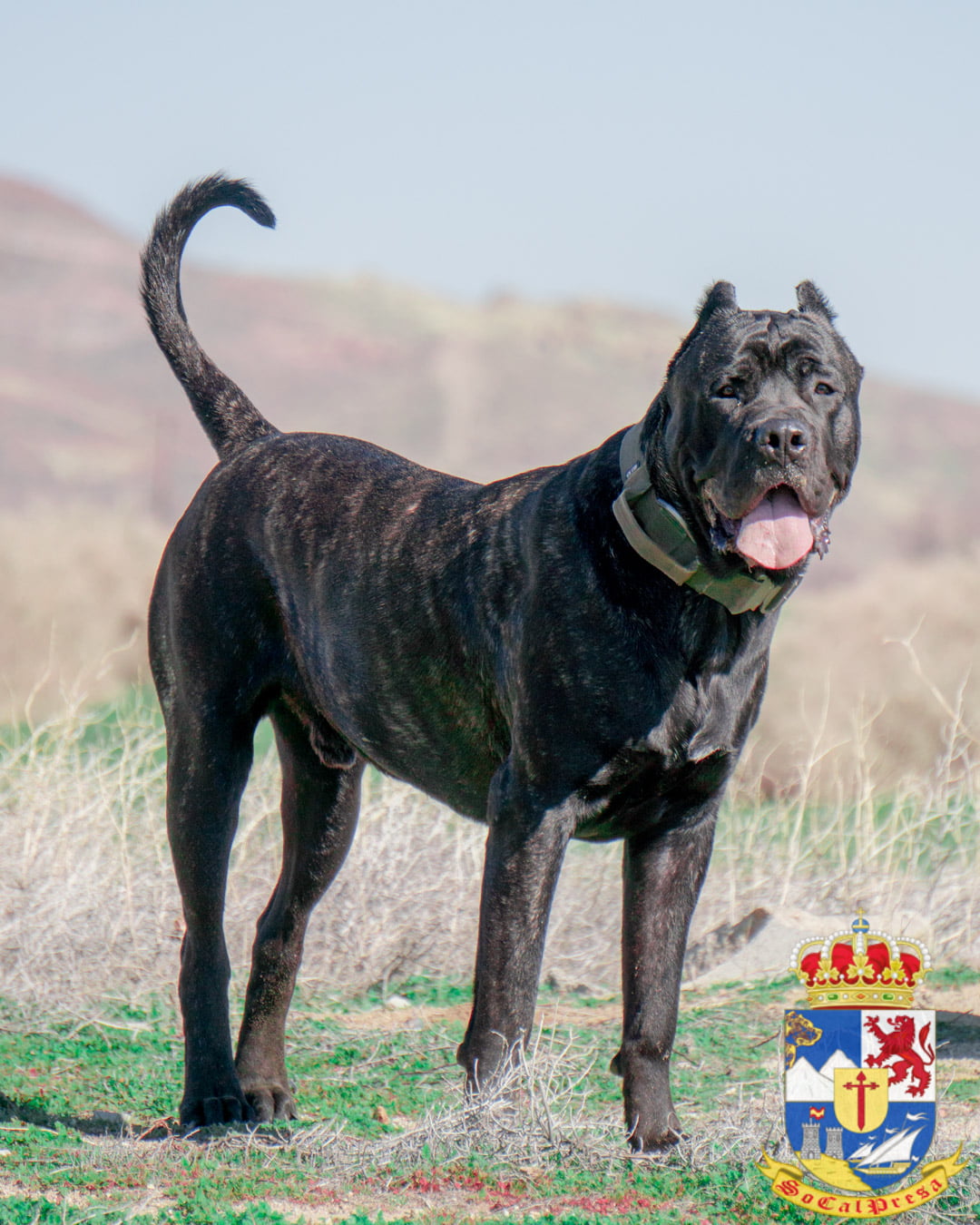
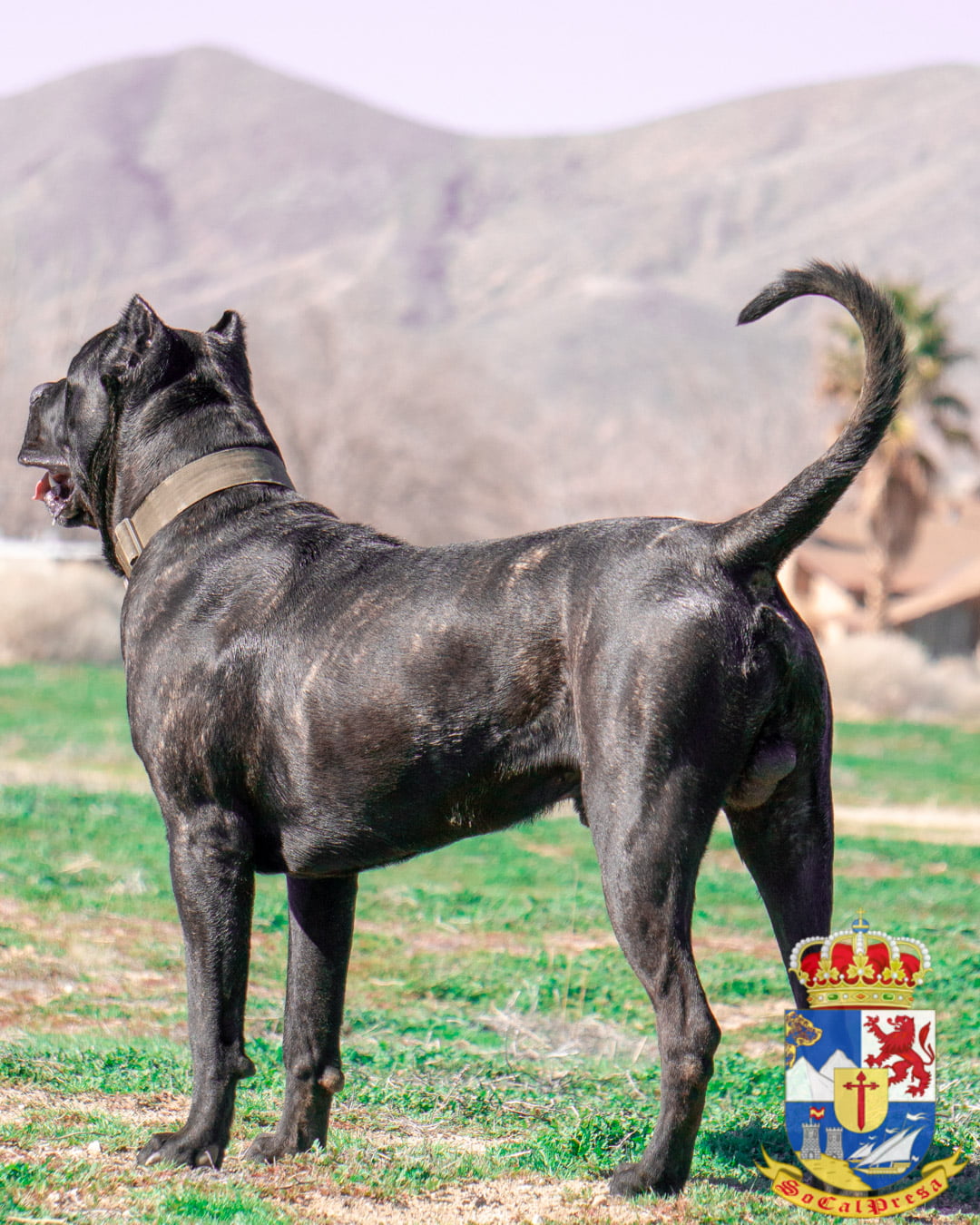
Dam: SocalPresa Negra | Height: 26" Withers | Weight: 110lbs. | Color: Black Brindle
Daughter of SoCalPresa King & Bella, SoCalPresa Negra is a black brindle Presa Canario that has the perfect show coat and is easily a show stopper. This girl retains all the original qualities of a Perro de Presa Canario and eliminating traits that are undesired which are visually apparent. She has the classic Presa Canario face, structure but with a flawless coat and XXL size. She enjoys going for long walks and runs with her mom along with intimidating any human who comes in distance of her. She is very active and loves playing fetch with her family in her leisure time. An extremely protective presa canario with spite towards non family, and adorning admiration for her loved ones. A total joy to live with throughout her entire life, and we could not ask for a better presa canario.